
KAM School of Health and Beauty Nairobi is a beauty-training institution listed in Nairobi County, Kenya. Its documented areas of study are hairdressing, beauty therapy, cosmetology, nail technology, hair design and salon-related practical skills. These areas are commonly taught through hands-on demonstrations and supervised practice. The available independent listings, however, do not establish that every older certificate or diploma title remains approved or currently open for registration. A current institutional website, confirmed teaching location and regulator licence were not independently established, so applicants should authenticate the provider and exact qualification before paying.
KAM School of Health and Beauty Nairobi contacts and location
Published postal address: P.O. Box 40375, Nairobi, Kenya. Directory telephone numbers: 020-230267 and 020-350721. Both have the Nairobi 020 landline prefix; the original directory incorrectly described one as a mobile number. A verified street address, current official email, institution-owned admissions site and active reception contact were not established.
A postal address is a mailing contact and cannot identify the college’s current teaching premises. Applicants should obtain written directions to the training salon, classroom and any approved practical-learning site before arranging a visit.
Hairdressing and beauty therapy programmes
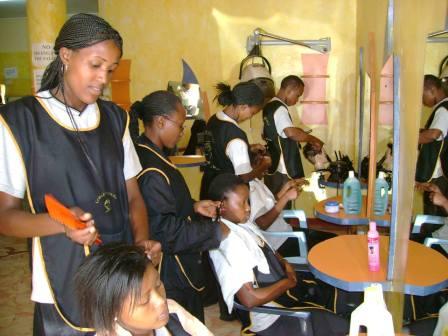
The school’s historic course list includes Certificate and Diploma in Hairdressing and Beauty Therapy. Hairdressing concerns cutting, styling, treatment, braiding, hair care and client consultation. Beauty therapy can include skincare, grooming, manicure, pedicure, professional hygiene and customer service.
These subjects require regular practical work rather than classroom theory alone. Students should ask how many hours are spent on supervised practice, whether models and consumables are provided, and which assessment is used to demonstrate competence.
Certificate and diploma in hairdressing
Hairdressing is also recorded as a standalone certificate and diploma route. The programme may address hair structure, salon tools, shampooing, styling, chemical-product safety, hygiene and finishing techniques.
A diploma and an introductory certificate should have different levels of competence and practical assessment. Learners should establish the actual approved award, course duration, required materials, entry conditions and examiner before enrolling.
Beauty therapy and skin-care skills
The older directory lists a Certificate in Beauty Therapy along with broader beauty diplomas. Training may involve skin assessment within a beautician’s scope, facial-care routines, safe cosmetic-product handling, sanitation and professional interaction with clients.
Beauty therapy does not independently authorise medical diagnosis, injections, prescription treatment or other regulated healthcare procedures. Students should understand the occupational limits of an ordinary beauty qualification.
Cosmetology certificate
Cosmetology combines aspects of hair, skin and personal-care services. A certificate may introduce salon organisation, products, hygiene, client consultation, styling and basic practical procedures.
Prospective learners should check whether the course includes recognised occupational units, assessed skills, workplace attachment and current industry methods. A certificate of attendance is not necessarily equivalent to a nationally assessed technical qualification.
Nail technology and nail design
Nail Technology appears separately in the institute’s catalogue. Practical study may include manicure, pedicure, nail preparation, application techniques, safe use of salon instruments, hygiene and basic nail decoration.
Learners should verify use of appropriate materials, proper ventilation and infection-control procedures. They should also ask whether practice equipment and consumables are covered by the tuition fee.
Hair design, styling and body adornment
Other historic diploma descriptions include Hair Design and Body Adornment and Hair Design and Beauty. These could address creative styling, braids, finishing, presentation and services within an appropriately defined salon curriculum.
Several titles overlap in meaning. Before choosing a course, ask whether they describe distinct current awards, older names for the same programme or only subjects in a broader training course.
Salon management and customer care
Successful salon work involves more than technical ability. Training may include booking clients, keeping simple financial records, protecting personal information, maintaining hygiene, organising materials and communicating professionally.
These are useful skills for employment or small-business operations, but the specific content must be confirmed with the college. An older directory listing cannot prove that a separate salon-management module is available.
Community nutrition in an older course listing
One legacy catalogue names a Diploma in Community Nutrition. Nutrition and dietetics have their own educational and professional requirements and are not interchangeable with beauty therapy. The listing is insufficient to confirm that KAM School of Health and Beauty currently has approved facilities or a specialist regulator’s permission to deliver a recognised nutrition qualification.
Applicants interested in nutrition should request the precise awarding body, programme approval and eligibility for professional registration instead of treating the beauty-school profile as evidence of an authorised healthcare diploma.
Unsupported PhD in Fashion Design and Marketing listing
An older education directory also associates the school with a PhD in Fashion Design and Marketing. There is no independently verified awarding university, approved academic partnership or authority establishing that KAM School of Health and Beauty can award a doctoral degree.
That unsupported entry is not presented as an available course. Any proposed doctoral programme in Kenya must identify an authorised university and be verified through the Commission for University Education. Prospective students should never assume that a private beauty-training school can issue a PhD merely because the title appeared in a directory.
Institutional TVETA accreditation and course recognition
A currently valid TVETA licence and authorised course list for the exact KAM School of Health and Beauty Nairobi institution were not independently found. Learners seeking a formal vocational award can check the TVETA register and the approved courses directory.
A listing in a beauty-college directory establishes a published institutional name and claimed subject areas, not its present legal standing or a guaranteed qualification. A similarly named beauty academy should not have its licence attributed to this provider.
Course entry conditions, practical facilities and training quality
Before joining, ask for the correct certificate or diploma title, actual examination body, programme code, entry grades, classroom or salon location, practical learning hours and what equipment the college supplies. Hygiene, supervised work and safety are important when providing personal-care services.
For practical beauty training, an in-person tour of the teaching salon can help establish whether the necessary equipment, workstations and materials are available for the number of enrolled trainees.
Fees, intake dates and payment safety
A current institution-issued intake timetable, fee structure, official bank account or mobile-money paybill was not verified. Applicants should ask for a written quotation that separates tuition, training kits, cosmetics or hair products, uniforms, examinations, practice materials and any attachment costs.
Only make payments after confirming the legal provider and obtaining an institutional invoice. The bank and student-portal links in the earlier generic article did not establish KAM’s payment arrangements.
Frequently asked questions about KAM School of Health and Beauty
What courses are documented? Hairdressing, beauty therapy, cosmetology, nail technology and creative hair design, subject to confirmation of current offerings. Where is the school? Its earlier listing gives a Nairobi postal address, but a current physical campus was not verified. Does it offer an approved PhD? There is no substantiated university authorisation for the old doctoral claim. Is TVETA accreditation confirmed? Not for the exact institution from the regulator records reviewed.
