
Ashleys Hair and Beauty Academy is a private technical and vocational training institution in Nairobi, Kenya, providing practical education for careers in hairdressing, beauty therapy, salon management and related creative trades. It operates within the wider Ashleys Kenya beauty and coiffure business. The Technical and Vocational Education and Training Authority (TVETA) lists Ashleys Hair and Beauty Academy as a registered and licensed college under TVETA/PRIVATE/TVC/0169/2016, with a licence expiry of 3 May 2028. Applicants should match the course, approved teaching campus and awarding body to their career goals.
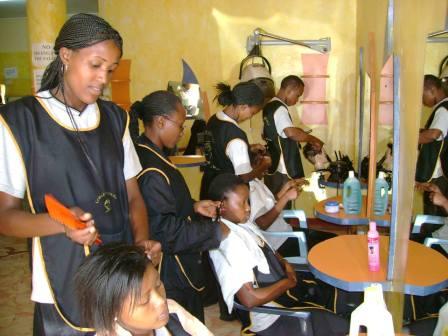
Ashleys Hair and Beauty Academy campus and contacts
Ashleys is associated with an academy in Buruburu, Nairobi. The Ashleys Kenya academy’s own promotional communications identify the Buruburu campus phone as 0728 880986. Public branch listings also associate the company with salon and beauty-service locations in Westlands, Lavington, Upper Hill, Nairobi CBD, Ruaka, Mombasa and Nakuru. These commercial salon locations should not automatically be treated as licensed academy teaching campuses.
Ashleys Kenya’s website is ashleyskenya.com. Applicants should confirm the current academy reception, precise classroom address, authorised course prospectus and official payment recipient. The fact that a salon accepts beauty appointments does not mean it handles student admission or professional examinations.
Ashleys Hair and Beauty Academy TVETA registration
The TVETA course-provider register identifies ASHLEYS HAIR AND BEAUTY ACADEMY in Nairobi County, registration TVETA/PRIVATE/TVC/0169/2016, with Registered and Licensed status and recorded expiry on 3 May 2028. A related course-provider listing also includes the academy. Students should check which specific hairdressing, beauty or trade-test course is approved and how assessment is organised.
Hairdressing courses and practical salon skills
Hairdressing training develops client consultation, hair hygiene, shampooing, conditioning, cutting, styling, braiding, product selection and safe use of tools. Practical classroom work should let learners demonstrate techniques under trained supervision. The level of the qualification and its examination arrangements depend on the particular academy programme. A short styling workshop may provide useful skills without being equivalent to a recognised diploma or trade test.
Students can benefit from learning the care needs of different hair types, professional communication, appointment management and workplace hygiene. Ask about required mannequins or models, hair products, protective equipment and whether the course fee covers these consumables.
Beauty therapy and cosmetology education
Beauty therapy can cover professional skincare, cleansing, basic facials, make-up, nail care, hygiene and client safety. More extensive training may include salon business procedures and treatment consultation. An academy course should explain which practical treatments are permitted within its training level and whether students are supervised in a suitable beauty room. General beauty qualifications do not authorise invasive or medical cosmetic procedures.
Nail technology, makeup and salon services
Nail and make-up skills can form part of a longer beauty qualification or be taught in shorter specialist workshops. Learners may practise nail preparation, shaping, product application, sterilisation and colour or style selection. Makeup courses can involve skin preparation, colour matching, hygiene, bridal application and client communication. Confirm the actual short courses available for the next intake; not every salon service is necessarily offered as an accredited academic programme.
Fashion design and accessories-making training
The academy has also been associated with Ashleys School of Fashion and Design, including fashion design, clothing construction, fabric decoration, beadwork and accessories such as bags and jewellery. These are broader creative training areas than hairdressing. If a fashion course is advertised, ask which institution issues the qualification, whether it is an ongoing programme and whether its workshop and assessment are covered by the relevant registration.
Fashion students can develop measurement, garment construction, pattern cutting, machine operation and product costing. Practical materials can significantly affect the cost of a course, so request an itemised list before enrolling.
Course levels, external assessments and recognition
Ashleys promotional materials and training listings refer to professional diplomas, advanced diplomas and external examining pathways. The actual issuing body may differ by course. For nationally regulated vocational awards, check the academy and approved programme in the TVETA courses directory. If an international qualification is advertised, confirm its precise title, external examination registration and recognition with the awarding organisation.
Ashleys admission requirements and learning schedule
Admission conditions depend on whether the learner chooses an introductory salon-skills course, a nationally assessed certificate, a diploma or an advanced professional route. Requirements can include academic documents, identification and course materials. Students should ask for the class timetable, the number of practical hours, learner-to-equipment ratio, examination calendar and any salon attachment or supervised practice that forms part of assessment.
- Contact the academy’s verified admissions office and ask for the latest course prospectus.
- Choose hairdressing, beauty therapy, nail technology, make-up or fashion training based on the exact award.
- Confirm the TVETA registration, approved campus and specific external assessment where applicable.
- Request the minimum entry conditions, timetable, practical facilities and equipment list.
- Get written tuition, examination, consumables and registration charges, plus authenticated payment instructions.
- Submit documents and keep the admission letter and official receipts.
Fees, salon attachments and student facilities
Fees depend on the course length, assessment and materials. Beauty products, hair tools, uniforms, models and examinations may create additional costs beyond tuition. Ask whether salon exposure is supervised and how placement is arranged; an association with a salon chain does not by itself guarantee paid employment after graduation. Students should evaluate practical facilities, health and safety procedures, trainer competence and assessment arrangements before making a deposit.
Career opportunities after Ashleys training
Hairdressing and beauty skills can support entry-level salon work, self-employment, bridal services, beauty retail or progression to specialist training. Building a portfolio of safe practical work and developing customer care, business records, pricing and hygiene skills can help graduates. Professional advancement depends on the actual qualification, experience and employer requirements.
Frequently asked questions about Ashleys Academy
Is Ashleys Hair and Beauty Academy licensed by TVETA? Yes. The TVETA register records registration TVETA/PRIVATE/TVC/0169/2016, expiring 3 May 2028.
Where is a training centre associated with Ashleys? Its academy communications identify a Buruburu campus in Nairobi.
What courses are associated with the academy? Hairdressing, beauty therapy, specialist salon skills and certain fashion and design subjects.
Are all Ashleys salons colleges? No. Students must verify which locations are authorised teaching premises.
How can I obtain current fees? Request the written programme-specific schedule from an authenticated academy admissions contact.
